Introduction
Scroll through any arnica cream listing and you'll see the same promises repeated: natural relief, no side effects, works for bruising and muscle aches. Many shoppers comparing options for sore muscles, joint discomfort, or minor swelling find it hard to tell one product from another.
Here's the thing: the word "arnica" on a label tells you almost nothing on its own. What matters is the concentration, the intended use, the full ingredient list, and whether the claims hold up against actual research.
This guide compares five arnica creams available to U.S. shoppers, breaks down cream versus gel formulations, and covers the safety details labels don't always highlight. Product formulas and pricing change, so verify current details before purchasing.
Key Takeaways
- Topical arnica is often used for localized aches, bruising, and minor swelling
- Pain-relief evidence for arnica creams is still limited and mixed
- Compare ingredients, directions, and application area—not marketing claims
- Never apply arnica to broken skin or take a topical product orally
- Ask a healthcare provider first if pregnant, breastfeeding, prepping for surgery, or on blood thinners
Overview of Arnica Creams for Pain Relief in the U.S. Market
Cream, Gel, or Something Else?
- Creams absorb as a semisolid emulsion, usually without heavy residue
- Gels use a gelling agent and dry into a thinner film
- Ointments feel greasier and more occlusive, so contact lasts longer
- "Salve" is mostly a marketing term, not a standardized formulation
None of these formats is automatically superior for pain relief — the vehicle affects comfort and spreadability, not proven efficacy.
Herbal vs. Homeopathic: What the Label Actually Means
Many arnica creams carry homeopathic labeling, such as "Arnica montana 1X HPUS." According to the FDA's guidance on homeopathic products, no homeopathic drug product has received FDA approval.
A homeopathic label reflects manufacturing standards recognized in the Homeopathic Pharmacopoeia, not evidence that the product works.
That distinction matters because it changes how you should read every claim in this guide: as a manufacturer's position, not a clinical guarantee.
What the Research Actually Shows
The evidence picture is genuinely mixed:
- A 2013 Cochrane review found moderate-quality evidence for one arnica gel in hand osteoarthritis, though the result didn't clearly rule out no benefit
- A laser-bruising trial using 20% arnica ointment beat petrolatum but wasn't superior to vitamin K
- A smaller, 19-patient trial found arnica gel performed no better than its inactive vehicle for laser bruising
- An exercise-soreness study of 20 men found less reported pain at 72 hours, but no improvement in measured muscle damage markers
None of these trials tested the specific products covered below. A positive result for one gel at one concentration doesn't transfer to a different cream at an undisclosed strength.

Why Formulas Add Extra Ingredients
Manufacturers often pair arnica with vitamin K, chamomile, calendula, bromelain, comfrey, or menthol. These additions may support bruising or skin comfort in theory, but they also add allergy and irritation risk, especially for sensitive or facial skin.
Safety callout: Don't apply arnica to wounds, broken or irritated skin, eyes, or mucous membranes. Anyone with a ragweed, daisy, or marigold allergy should be cautious, since arnica belongs to the same plant family.
With the label basics covered, here's how five specific products stack up.
Top Arnica Creams for Pain Relief
Each cream below is scored on intended use, ingredient transparency, texture and absorption, safety notes, and U.S. availability. Arnica on the label alone does not make a product the "strongest" option.
Boiron Arnicare Cream
Boiron positions this homeopathic cream for muscle pain, stiffness, swelling from minor injury, and bruising. It is one of the clearer labels in the category, listing Arnica montana 1X HPUS at 7% plus a full inactive-ingredient panel.
That disclosed strength and injury-focused directions make it a practical everyday option for bumps and minor strains.
| Category | Details |
|---|---|
| Best for | Minor muscle aches, stiffness, and bruising (ages 1+) |
| Formula and texture | Arnica montana 1X HPUS 7%; shea butter, coconut oil, glycerin; non-greasy absorb |
| Safety and value | Thin layer up to 3x daily; avoid broken skin, eyes, and mucous membranes; 1.33–4.2 oz at about $9–$17 |
VitaMedica Arnica + Vitamin K Cream
VitaMedica targets post-cosmetic-procedure bruising, under-eye discoloration, and delicate facial skin—not general muscle or joint pain. Skip it if you need a sore-shoulder rub.
The brand lists arnica, vitamin K oxide, vitamin C ester, and a proprietary botanical blend, but does not publish full concentrations or a complete ingredient list on its product page.
| Category | Details |
|---|---|
| Best for | Facial bruising and post-procedure aftercare (not body pain) |
| Formula and texture | Arnica, vitamin K oxide, vitamin C ester; fragrance- and paraben-free per brand; strengths undisclosed |
| Safety and value | Patch-test near incisions; clear with your provider after procedures; $27.95 |
Dermaka Cream
Dermaka is a skin-comfort moisturizer aimed at bruising, swelling, and post-procedure recovery—not a conventional muscle-pain cream. The formula lists bromelain, green tea, chamomile, licorice extract, and vitamin E.
You get broad ingredient transparency without a stated arnica percentage.
| Category | Details |
|---|---|
| Best for | Post-procedure bruising and skin comfort (not muscle or joint pain) |
| Formula and texture | Arnica extract, bromelain, chamomile, green tea, licorice, vitamin E; phenoxyethanol and ethylhexylglycerin preservatives |
| Safety and value | Avoid open or irritated skin; patch test first; 4 oz tube at $34 |
Nelsons Arnicare Arnica Cream
Nelsons Arnicare is a different product from Boiron's similarly named cream. It lists arnica mother tincture at a 1:10 ratio and allows application up to four times daily.
Nelsons promotes the cream on its U.S. site, but U.S. purchase paths and pricing were not clearly confirmed during research—verify stock and price before you buy.
| Category | Details |
|---|---|
| Best for | Minor bruising and aches, if U.S. stock is confirmed at purchase |
| Formula and texture | Arnica mother tincture 1:10; apricot kernel oil and cocoa butter; methylparaben and propylparaben |
| Safety and value | Up to 4x daily; avoid broken skin; not for pregnancy/breastfeeding per label; 30g and 50g; U.S. price unverified |
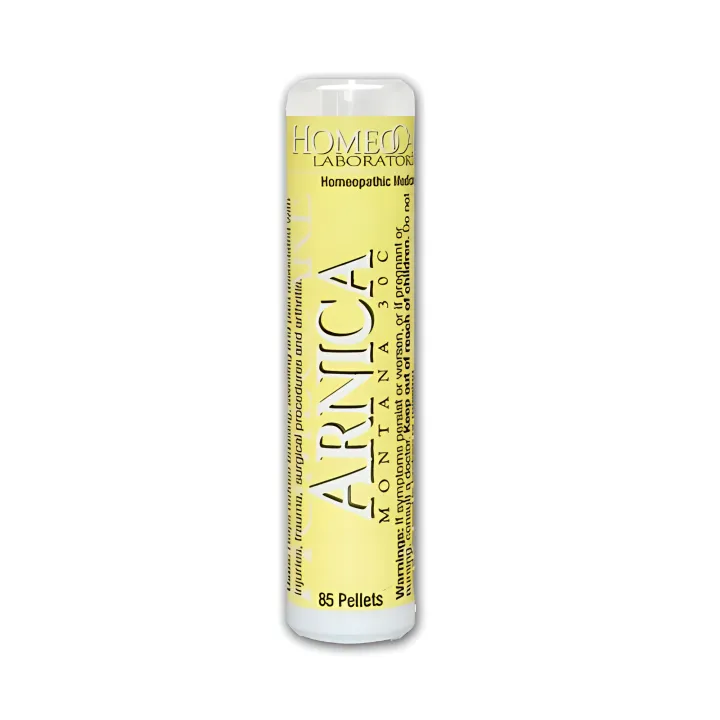
HomeoCare Arnica Relief Topical Cream
Homeocare's Arnica Relief Topical Cream is a simpler, budget-minded homeopathic first-aid option for pain, bruising, muscle aches, injuries, and pre- or post-surgical discomfort. Homeocare manufactures the cream as an FDA-registered homeopathic OTC establishment. Arnica montana is the primary listed remedy; no numeric concentration appears on the page.
Apply to unbroken skin as soon as possible after injury, at least three times daily. As with every product here, FDA has not evaluated the claims.
| Category | Details |
|---|---|
| Best for | Everyday bumps, bruises, and post-injury first aid on a budget |
| Formula and texture | Arnica montana as primary active; fragrance-free and non-greasy per brand |
| Safety and value | Unbroken skin only, at least 3x daily; 2 oz tube $12.99 (reg. $15.99); ask a doctor for underlying conditions |

Which One Fits Your Situation?
- Best for general body aches and bruising: Boiron Arnicare Cream — disclosed 7% strength and clear injury-focused directions
- Best for facial or post-procedure bruising: VitaMedica or Dermaka — cosmetic aftercare focus, not muscle pain
- Best for simple, budget-friendly first aid: Homeocare Arnica Relief Topical Cream — no-frills option without facial-skincare pricing
How We Chose the Best Arnica Creams
Star ratings, "natural" branding, and the highest advertised arnica percentage rarely show whether a cream fits your pain type or skin needs. We scored each product on five factors:
- Evidence and claim accuracy: Does published research support this formula, or only arnica in general?
- Formula transparency: Does the label list active strength, inactives, warnings, and allergens?
- Pain-relief relevance: Is it made for muscle and joint discomfort, or mainly cosmetic bruising?
- Usability: How do texture, absorption, and scent hold up for sensitive skin?
- Quality and availability: Can you buy it reliably from a legitimate U.S. retailer at a steady price?
Common mistakes to avoid:
- Applying arnica to broken or irritated skin
- Combining cream with oral arnica pellets without checking with a provider
- Assuming a homeopathic label proves clinical effectiveness
- Self-treating severe, sudden, or unexplained pain instead of seeing a doctor

Conclusion
Topical arnica cream may be worth trying for minor, localized soreness or bruising. It is not a guaranteed fix. Supporting research is limited, small-scale, and often based on formulas that differ from common retail products.
Before you buy or apply one:
- Match the product to the area and goal, such as a sore muscle or facial bruising
- Patch-test new creams and stop use if irritation develops
- See a healthcare provider for pain that is severe, persistent, or unexplained
If you formulate or sell these products, the manufacturing side matters as much as the finished cream.
For supplement companies and private-label brands: Homeocare has operated since 1995 as an FDA-registered homeopathic OTC drug establishment with cGMP-compliant production. Capabilities include cream, ointment, gel, and other contract manufacturing and packaging. For an arnica formula or another homeopathic line, contact the Homeocare team to confirm current compliance requirements and formulation options.
Frequently Asked Questions
Is arnica gel or cream more effective?
Neither format is universally better. Gels usually absorb into a thinner film, while creams often feel richer and less drying. Effectiveness depends more on the product's concentration and your intended use than on the format itself.
Does arnica really work for pain relief?
Some studies suggest possible benefit for certain aches or minor inflammation. The research is limited, mixed, and often doesn't match products sold today. Treat it as a possible aid, not a guaranteed treatment.
How do you use arnica cream for pain?
Apply a thin layer to intact, unbroken skin as directed on your specific product's label. Avoid eyes and open wounds, wash your hands after application, and stop use if irritation or a rash develops.
Is arnica cream safe to use every day?
That depends on the specific product's label and your health history. Avoid prolonged daily use without professional guidance, especially if pain persists beyond a few days or you take medications that may interact.
When should you avoid arnica cream?
Skip it on broken or irritated skin, and if you have a known allergy to arnica or related plants like ragweed. Get medical advice first if you are pregnant, breastfeeding, preparing for surgery, or taking blood thinners.