This small yellow flower has a long history in European herbal medicine, and it shows up in creams, gels, and homeopathic pellets across the United States. The research on it, though, is mixed. Some studies show modest benefits. Others show no real difference from a placebo.
Here's the short answer: topical arnica may help some people with localized soreness or bruising, but it isn't a guaranteed swap for ibuprofen or a visit to your doctor. Before you buy a tube of anything labeled "arnica," it helps to understand the difference between herbal and homeopathic versions, how to use either one safely, and when pain actually needs medical attention.
Key Takeaways
- Topical arnica shows mixed but promising results for muscle soreness, bruising, and mild joint discomfort.
- Herbal (concentrated) arnica and homeopathic arnica differ; only homeopathic forms are meant to be swallowed.
- Never ingest raw or concentrated arnica; apply topical products to unbroken skin only.
- Persistent, severe, or worsening pain calls for a medical evaluation, not more cream.
What Is Arnica Montana?
Arnica montana is a flowering plant in the daisy family (Asteraceae), native to mountainous regions of Europe. Traditional herbalists have used its flowers for centuries to ease bruising, muscle soreness, swelling, and minor joint aches.
The European Medicines Agency recognizes arnica preparations for this kind of traditional topical use, though that recognition rests on long-standing use rather than modern clinical trial proof.
The Chemistry Behind the Claims
Researchers point to sesquiterpene lactones, particularly a compound called helenalin, as arnica's active ingredients. Laboratory studies suggest helenalin can interfere with a protein involved in the body's inflammatory response. That mechanism is interesting, but it is not the same as proving a specific cream reduces pain in real people. A compound working in a petri dish doesn't automatically translate to relief on your sore shoulder.

Herbal Extract vs. Homeopathic Preparation
This distinction trips up a lot of shoppers:
- Herbal/concentrated arnica contains meaningful amounts of the plant compound and can be toxic if swallowed.
- Homeopathic arnica (often labeled "30C" or similar) follows a different dilution system—some products are diluted until little or no original plant material remains measurable.
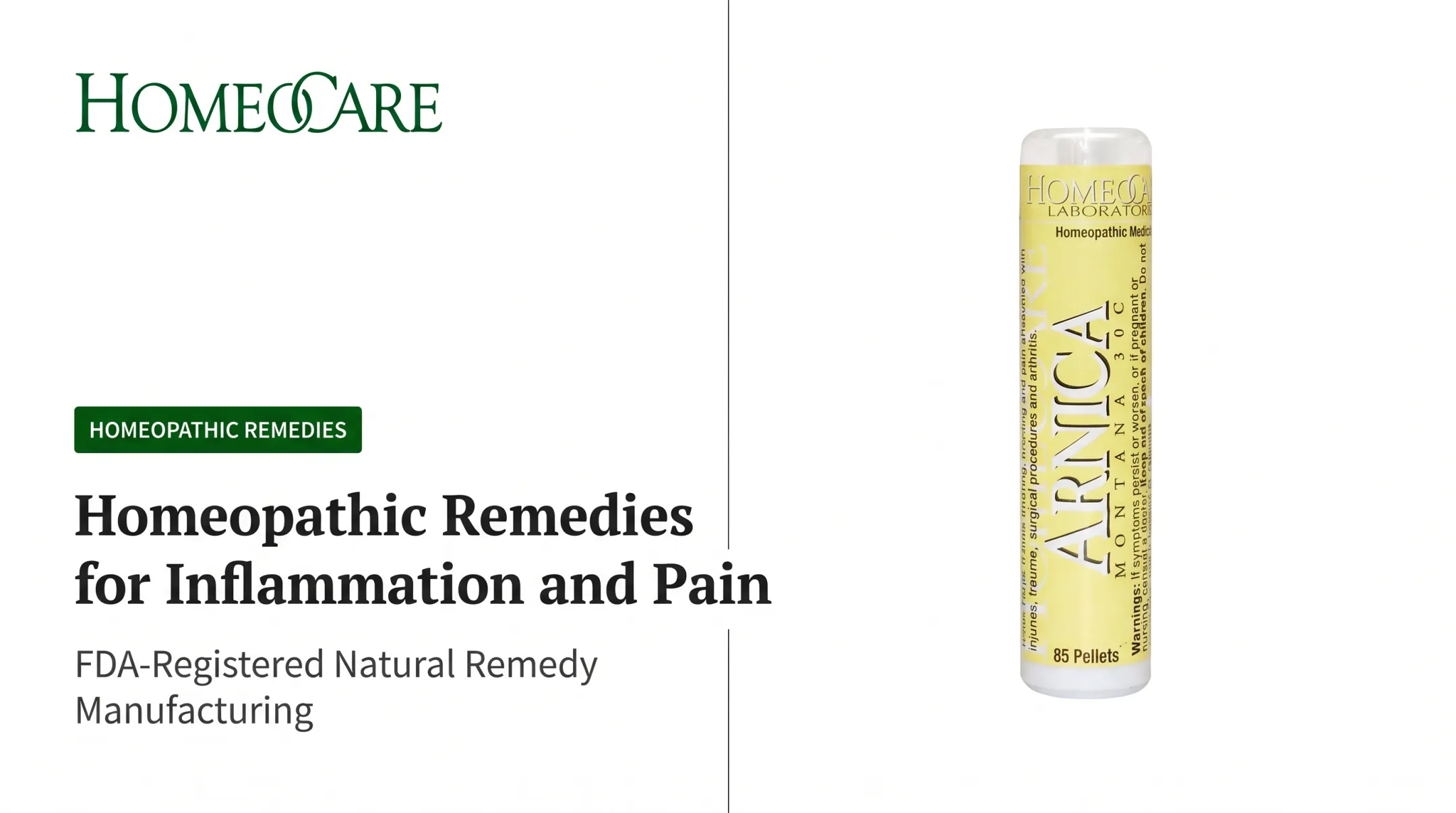
These two categories are not interchangeable, and a study on one tells you almost nothing about the other. Homeocare's Arnica Montana 30C pellets, for example, are an oral homeopathic remedy designed for sublingual use—unlike a concentrated herbal tincture.
"Natural" is not the same as "automatically safe." Concentration, preparation method, route of application, and labeling shape a product's risk profile—not the fact that it started as a flower.
Does Arnica Montana Relieve Pain? Evidence and Limitations
The research on topical arnica is genuinely mixed, and the results depend heavily on what condition is being tested and which formulation was used.
| Condition | Study Design | Result |
|---|---|---|
| Hand osteoarthritis | Randomized trial, 204 people, 21 days, arnica gel vs. 5% ibuprofen gel | No significant difference between the two — arnica gel was "not inferior" |
| Post-exercise calf soreness | Placebo-controlled, within-person | Arnica showed slightly higher reported pain at 24 hours than placebo |
| Post-running muscle soreness | Placebo-controlled, 20 trained men | Less reported pain at 72 hours, but no change in muscle-damage markers |
| Laser-induced bruising | Rater-blinded, 20% arnica vs. petrolatum | Arnica improved bruise appearance faster than petrolatum |
| Post-surgical eyelid bruising | Randomized, 136 patients, 10% arnica ointment | No improvement over placebo |
A 2013 Cochrane review rated the arnica-versus-ibuprofen evidence as moderate quality, but that conclusion came from a single hand-osteoarthritis study with 174 participants in its pain analysis. The confidence interval for the difference between groups crossed zero, meaning "no real difference" is still on the table.

So, Is Arnica "As Strong As" Ibuprofen?
No. At least not across the board. The one study that compared them directly tested topical arnica gel against topical ibuprofen gel for hand osteoarthritis over three weeks. It says nothing about:
- Oral ibuprofen
- Headaches
- Acute injuries like sprains
- Chronic back or nerve pain
Generalizing one narrow finding to "arnica beats ibuprofen" oversells what the research actually shows.
What This Means in Practice
Arnica may ease symptoms for some people some of the time. It does not correct the underlying cause of a torn ligament, a degenerating joint, or nerve irritation. Treat it as a possible add-on for minor discomfort, not a substitute for rest, physical therapy, or a proper diagnosis.
Results also vary by product concentration and formulation. A study on a 20% arnica ointment doesn't guarantee the same outcome from a 5% cream, so check what you're actually buying before assuming a clinical result applies to your bottle.
Which Arnica Form Is Best and How Should You Use It?
Arnica comes in several forms, and picking the right one matters more than picking the "strongest" one.
The main options:
- Topical creams, gels, ointments, or balms — applied to intact skin over the sore area; preferred for localized muscle or joint discomfort.
- Homeopathic pellets, tablets, or liquids — taken under the tongue; evidence for oral homeopathic products is limited, and they differ from concentrated herbal extracts.
- Raw flowers, teas, tinctures, or concentrated extracts — never self-administer orally due to toxicity risk.
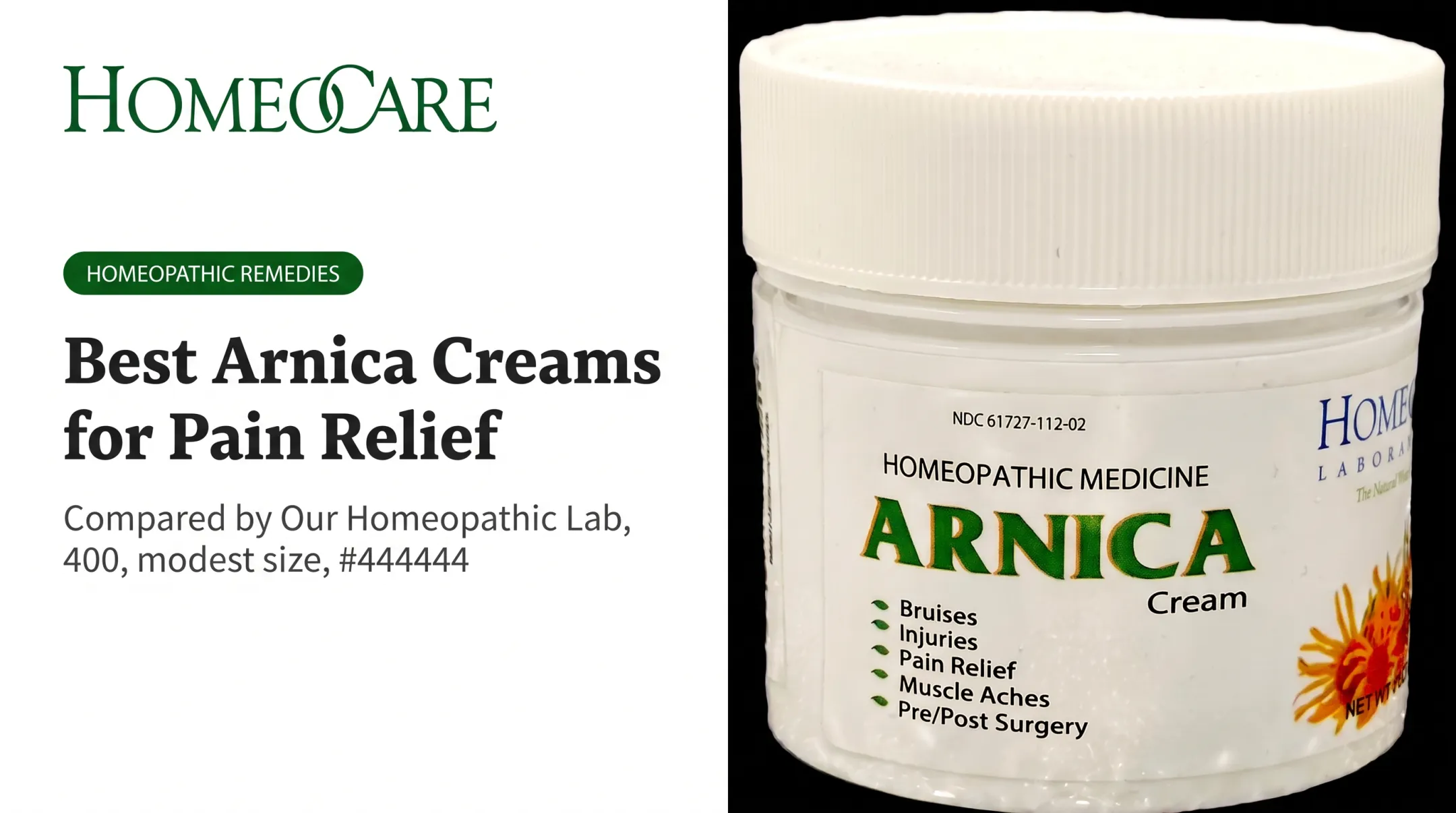
For most everyday bumps, bruises, and sore muscles, a topical product on intact skin is the sensible starting point. Homeocare's Arnica Relief Topical Cream, for instance, is directed for unbroken skin as soon as possible after an injury, with reapplication at least three times daily.
Always check the label on the product you buy. Directions, dilution, age restrictions, and warnings vary by manufacturer; there is no universal dose for every arnica cream.
Safe Application Steps
- Apply only to intact, unbroken skin.
- Avoid the eyes, mouth, and other mucous membranes.
- Wash your hands after application.
- Follow the label's frequency instructions rather than guessing.
- Keep the container sealed and out of children's reach.
- Stop use immediately if irritation develops.
If you have sensitive skin or known allergies to ragweed, daisies, chrysanthemums, or marigolds, do a small patch test first. Redness, itching, or swelling at the test site means don't proceed with broader use.
How Fast Should It Work?
There's no reliably established universal timeframe. Onset depends on the cause of the pain, the product's concentration, and individual response. Follow the label's guidance. If symptoms don't improve or get worse within a few days, check in with a pharmacist or clinician rather than applying more.
Don't ingest concentrated arnica, and don't layer multiple arnica products (cream plus tablets plus pellets) without asking a professional first, even when combo products are marketed together for convenience. Match the form to the complaint you actually have.
Arnica Safety, Side Effects, and When to Seek Care
Most people tolerate topical arnica reasonably well, but side effects do happen.
Common topical reactions:
- Redness or itching
- Burning sensation
- Rash or contact dermatitis
- Worsening irritation with continued use
Stop using the product if any of these appear. Seek urgent care for signs of a severe allergic reaction, such as facial swelling or difficulty breathing.
The Ingestion Warning
Do not swallow raw, concentrated, or improperly prepared arnica. A published safety assessment documented severe poisoning cases after arnica ingestion, including gastrointestinal, cardiovascular, and neurological effects.
This warning applies to concentrated herbal arnica, not properly labeled homeopathic pellets designed for oral use. Check the label before assuming any arnica product is safe to swallow.
Who should talk to a healthcare provider before using arnica:
- Pregnant or breastfeeding individuals
- Children
- People with bleeding or clotting disorders
- Those with significant liver or kidney disease
- Anyone with a known daisy-family allergy
- People preparing for or recovering from surgery
If you take anticoagulants, corticosteroids, blood-pressure medication, or anything that affects bleeding, review it with a pharmacist first. The research doesn't establish a confirmed interaction for topical arnica specifically, but caution beats guessing.
One label myth worth clearing up: "homeopathic" doesn't guarantee effectiveness or a specific quality standard. Dilutions, manufacturing controls, and safety profiles vary by product and manufacturer.
Red Flags That Need Medical Evaluation, Not Arnica
- Severe or rapidly worsening pain
- Major swelling or visible deformity
- Inability to bear weight or move a joint
- Fever or spreading redness
- Unexplained or extensive bruising
- Head injury or a new, severe headache
- Neurological symptoms (numbness, weakness, confusion)
- Chest pain
- Pain that persists or keeps returning
These symptoms need medical evaluation first—not a topical cream. See a doctor.
How to Choose a Quality Arnica Product
Not every bottle labeled "arnica" is created equal. A quick label check goes a long way.
Checklist before you buy:
- Confirm "Arnica Montana" is listed and note the form (topical concentration or homeopathic potency, like 30C).
- Read the directions and warnings fully.
- Check the expiration date and confirm the seal is intact.
- Avoid vague or incomplete ingredient lists.
- Buy from a U.S. source with accessible manufacturer information.
Manufacturing quality and proven pain relief are not the same thing. A product made under cGMP standards in an FDA-registered facility tells you the manufacturer follows consistent production controls.
According to the FDA's guidance on homeopathic products, no homeopathic products are FDA-approved for effectiveness, regardless of manufacturing credentials. Registration and good manufacturing practices support consumer confidence in how a product is made — they don't verify that it will relieve your particular pain.
Homeocare, founded in 1995, operates as an FDA-registered homeopathic OTC drug establishment with cGMP-compliant production. Those credentials are worth checking when you compare manufacturers, but they don't replace clinical evidence on a specific formulation. If a product's label is unclear, or if you're taking prescription medications, ask a pharmacist before adding arnica — oral or topical — to your routine.

Frequently Asked Questions
How quickly does arnica work on pain?
Onset varies by product, concentration, and the cause of your pain—there is no single reliable timeframe. Follow the label, and check with a pharmacist if symptoms persist or worsen after a few days.
Is arnica as strong as ibuprofen?
Not for every use. One study found topical arnica gel performed similarly to topical ibuprofen gel for hand osteoarthritis, but that result does not apply to headaches, acute injuries, or oral ibuprofen.
Is arnica good for pain relief?
It may offer modest relief for some localized soreness, bruising, or mild joint discomfort. Evidence remains limited and product-specific, and it shouldn't replace addressing the underlying cause of persistent pain.
Does arnica help joint pain?
Limited evidence suggests topical arnica may ease some osteoarthritis-related discomfort in certain studies. Persistent, swollen, or function-limiting joint pain still needs a proper medical evaluation.
Does arnica help with headaches?
Evidence for headache relief is insufficient to recommend it. Never apply arnica near the eyes, and don't use it to delay evaluating a new, severe, sudden, or neurological headache.
Which form of arnica is best?
For localized discomfort, an appropriately labeled topical product is generally the preferred starting point. Discuss it with a pharmacist or clinician. Avoid raw or concentrated oral arnica, and don't assume homeopathic products are proven effective simply because they're labeled that way.